
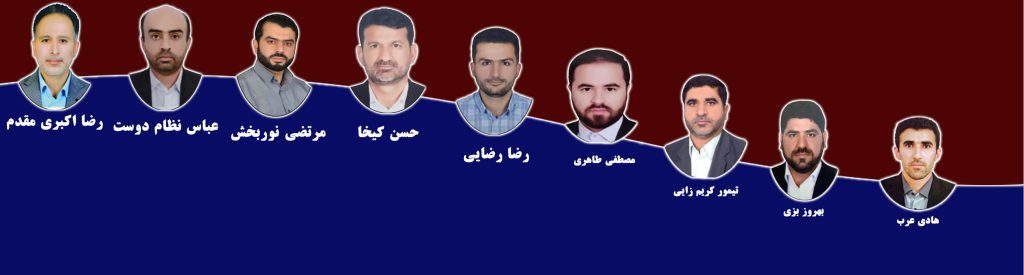
A seminar titled “Barriers and Challenges of Research in Iranian universities from the perspective of Ph.D. scholars in Political Science” was held on May 23, 2025, in Zahedan, Iran.
The event was organized by TECODH in collaboration with Iranian Association of West Asian Studies and attended by the following Ph.D. candidates: Morteza Noorbakhsh, Hasan Kekha, Behrooz Bazi, Mostafa Taheri, Hadi Arab, Teimoor Karimzai, Abas Nezamdoost, Reza Akbari Moghadam, and Reza Rezai, and was chaired by Ahmad R Taheri.
Participants presented their perspectives, experiences, and critical insights on the state of research within the field of political science. They proposed recommendations aimed at enhancing the quality and impact of academic research in Iranian higher education.
At the outset, the discussion addressed the motivations behind the widespread pursuit of doctoral degrees in Iran; four reasons were identified:
- Intrinsic academic interest: Individuals with a genuine passion for scholarship and research often seek to advance their academic trajectory through doctoral studies.
- Social prestige: In contemporary Iranian society, the Ph.D. title is frequently associated with social status, personal credibility, and success. The title “doctor” carries considerable significance.
- Employment prospects: Particularly within the discpline of humanities, where jobs are hardly found, advanced academic qualifications are viewed as a potential pathway to positions in academia or the public sector.
- Professional promotion: Many civil servants pursue doctoral degrees for their organizational promotion, regardless of whether the degree aligns with their professional responsibilities.
A central concern raised during the session was the outsourcing of thesis and dissertation writing. It was noted that due to a decline in research motivation, time constraints, or the desire for being called “doctor,” many so-called scholars delegate their research work to other individuals or institutions. This troubling trend results in the awarding of degrees that lack academic integrity and produces graduates who may ascend to influential roles without the necessary analytical, critical thinking, or problem-solving capabilities.
Broader systemic challenges facing research in Iran were also examined, including lack of seriousness and institutional commitment toward research. Insufficient funding, particularly in humanities and social sciences. Weak collaboration between research institutions and government. Disconnection between research topics and the practical needs of society. Low quality of research and plagiarism. Inadequate oversight in the supervision and evaluation of outputs. Lack of motivation to undertake original and impactful research.
Bureaucratic hurdles in obtaining research approvals. Lack of effective incentive for academic staff and researchers. Neglect of academic findings in policymaking process by government. Limited international research due to insufficient foreign language proficiency among scholars.
Prticipants asserted that research must be pursued meaningfully and rigorously and emphasized that in Iran, research remains largely confined to academic institutions where it often falls short of broader intellectual and societal missions.
They advocated for problem-oriented and relevant research on social, cultural, economic, and governance spheres and argued that research is not merely a publication requirement but rather a mode of critical thinking and systematic problem-solving. As long as research remains superficial and formalistic, it can not be expected to play a significant role in solving the country’s pressing issues.
www.tecodh.ir