
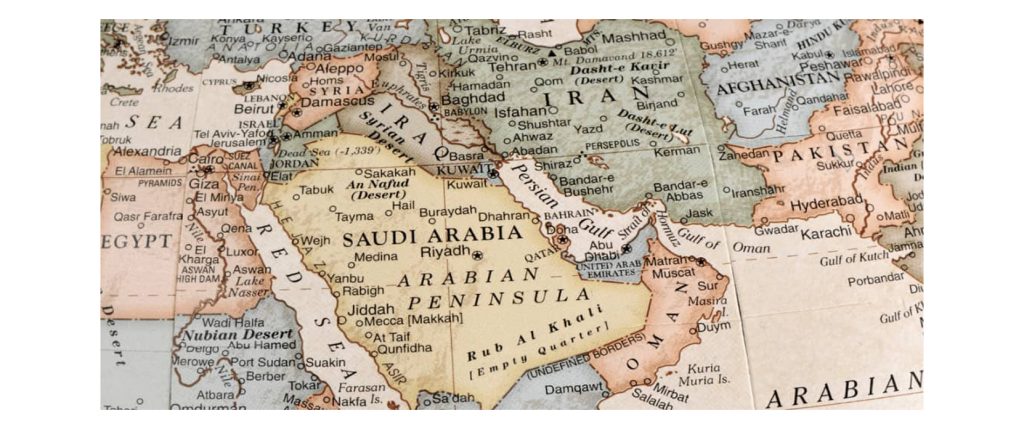
Student Symposium on “Developments and Transformations in Politics and State in the Contemporary Middle East” hosted by IAWAS and TECODH and chaired by Ahmad R Taheri held in Zahedan (Iran), 15 May 2025.
This academic session, which was attended by Helena Shahbakhsh, Majid Najafzadeh, and Mohammad Bardestani (Political Science M.A students, Islamic Azad University Zahedan) focused on three main themes.
At the outset, the session addressed the following question: What factors are responsible for Durability or Transformation of Authoritarian Structures in the Middle East?
Students identified the following three key factors influencing the persistence or change of such regimes. First, foreign interventions, particularly Western powers, have played a decisive role in either strengthening or weakening authoritarian regimes, which have significantly impacted the region’s political structures. Second, public satisfaction or dissatisfaction, where widespread discontent has in some instances led to protest movements and fundamental changes in political structures.
Third, rigid ideologies, which hinder the adaptability of political systems to evolving social and international conditions, thereby accelerating the fragility and eventual collapse of certain regimes.
In the next segment of the symposium, the interrelationship between religion and politics in the governance of Middle Eastern countries was explored.
Students emphasized that religion has played a highly influential role in the region’s political transformations and, in many cases, has been employed as a tool for gaining, maintaining, or legitimizing political power. According to the participants, the intertwining of religious and political institutions in some countries has not only shaped power structures but also contributed to the reproduction of authoritarianism and restricted political reforms. However, students also stressed that religion itself is not inherently a cause of political stagnation, but rather specific interpretations and instrumental uses of religion have hindered political development and the modernization of institutions.
In the final section of this symposium, the discussion focused on this issue that to what extent political change in the Middle East is driven by the real will of the people and to what extent it is influenced by the external factors.
Students collectively agreed that, although the public will is portrayed as the main driver of political change, in practice, it is frequently shaped by both domestic and external forces. In their view, foreign powers—particularly Western countries—have played an active role in steering public demands and actions through political, media, and economic tools. Thus, political developments in many cases are not purely the product of popular will, but rather the result of a redirected and reconstructed public will align with the interests of external actors.
Organized by IAWAS and TECODH. Zahedan, 15 May 2025.
Join us on our Whatsapp Channel