
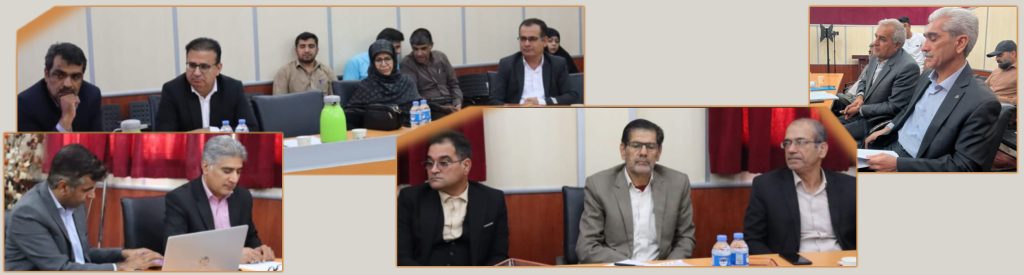
A Seminar on “Examining the Link between Drought and Migration in Sistan and Ways to Overcome It” was held in Zabol with the participation of several professors and researchers. It was organized by TECODH, Department of Political Science at Zabol Islamic Azad University, and the Iranian Association for West Asian Studies (Sistan & Balochistan), and managed by Ahmad Reza Taheri. October 30, 2025.
Ahmad Mir, PhD in International Relations and lecturer, explained the water crisis between Iran and Afghanistan, stating that approaching this issue through military means is irrational. He emphasized, however, while military approaches should be dismissed, it is also essential not to overlook the reality that diplomacy without the backing of power lacks the necessary effectiveness. In his view, economic and trade incentives could serve as suitable alternatives to military pressure, and Iran can leverage these capacities to encourage Afghanistan to adhere to its international commitments regarding water. Mir pointed out that water crisis in Sistan, along with ongoing droughts and increasing migration, is not only a result of climatic conditions but also a direct product of mismanagement. He noted, historically, great human civilizations have formed around water resources; thus, neglecting the issue of water equates to disregarding the foundations of development and social life. He reminded that there is a formal treaty between Iran and Afghanistan regarding water allocation that is binding under international law, and both countries must adhere to its provisions. If either party violates its commitments, pursuing the matter through international judicial bodies and filing formal complaint is a legitimate action. Dr. Mir believes, Iran can defend its water rights and even seek compensation for damages by relying on the principles of international law. He emphasized, the economic, social, and cultural life of Sistan is directly dependent on the continuity of water flow. Any industrial investment in the region, without sustainable water resource provision, will be fruitless. Therefore, the water issue must be prioritized in regional and national planning to outline a sustainable future for Sistan.
Akbar Khajeh, a faculty member of Political Science at Payame Noor University, emphasized the distinction between the concepts of “agonism” and “antagonism” in his analysis of the water crisis. He considers water to have an agonistic nature and drought to be an antagonistic phenomenon. An agonistic view acknowledges the existence of others and allows for interaction and coexistence among different forces. In contrast, antagonism implies the denial of others, conflict, and exclusion. Khajeh believes, the current situation in our region—especially in the context of Iran-Afghanistan relations—has entered a phase of complex interdependence where no country can define its interests without considering those of its neighbors. Hence, regarding the water crisis, Iran has a legitimate competitor. We have disagreements, but we must recognize each other’s existence and strive to compete within the framework of interaction and dialogue. Khajeh noted, historical agreements on water between Iran and Afghanistan were made under specific past conditions and differ from today’s realities. He believes that within the current international order, where he claims the veto power plays a decisive role, relying on international courts to resolve water disputes between the two countries is not very realistic. Therefore, there should be a shift towards water diplomacy and regional cooperation. He emphasized, Afghanistan is in the process of forming a nation-state, and in this path, water can be used as a political and symbolic tool to consolidate the authority of the central government. This naturally influences Afghanistan’s political behavior towards Iran and the management of border waters. In such circumstances, Khajeh believes, Iran’s perspective should also move away from traditional and security frameworks towards an approach based on informed, specialized, and forward-looking policymakers. He added, there are likely politicians in Iran who can grasp the complexity of this crisis, but the political atmosphere of the country has not yet allowed them to emerge and make an impact. Dr. Khajeh highlighted that resolving the water crisis in Sistan cannot solely rely on centralized national decisions but requires strengthening local capacities and involving elites and indigenous communities. He also distinguishes between migration and drought, asserting that migration in Sistan is not necessarily a direct consequence of drought but stems from the climatic, social, and historical features of the region. In fact, Sistan has historically witnessed a form of human and geographical mobility that cannot be explained solely by environmental variables.
Rahmatollah Dahmardeh, an expert for the state broadcasting organization in Sistan and Balochistan, referred to a statement of Supreme Leader of the Islamic Republic (2023): “If the resolutions made in the early decade of 2000, when I visited Sistan and Balochistan, had been properly implemented, the face of the province would be completely different today. Unfortunately, in some governments, negligence and indifference occurred, and many decisions were left unexecuted…” Dahmardeh, citing these remarks, stated that despite spending billions of Tomans on various projects, there has been no significant output in improving the living and environmental conditions of the region. He noted, the existing approaches have lacked the necessary effectiveness and a significant portion of financial resources has been spent on projects that were initially devoid of scientific backing and effective oversight. He added, building walls at the borders or around critical areas cannot prevent the spread of phenomena such as storms, as these issues have transnational and climatic natures and require scientific and inter-regional solutions. He pointed to the Zabol Research Institute, which was created to study and solve the water issue in the region, and added that this institute has so far been unable to fulfill its mission. Dahmardeh believes, the roots of these failures lie in internal mismanagement, weak planning, and lack of coordination among executive bodies. He warned that if the current trend continues, the economic, social, and environmental situation in Sistan and Balochistan will become more critical. Therefore, he believes, solving the problems of this province requires fundamental actions. Dahmardeh emphasized that work must be done fundamentally; implementing temporary projects or injecting budgets does not work well rather it requires serious investment in economic, social, health, educational, and tourism infrastructure. He added, sustainable development in the region can only be achieved by utilizing local, specialized, and committed human resources. In his view, reliance on local forces not only increases the effectiveness of programs but also strengthens the sense of belonging and social responsibility among the people of the region. Dahmardeh emphasized that saving Sistan from its current situation depends on proper management, long-term vision, and constructive interaction between national and local institutions.
Mohammad Taghi Rakhshani, PhD in history, lecturer, and editor-in-chief of Zahedan newspaper, analyzed the drought and migration crisis in Sistan. He said, the reduction in rainfall cannot be considered the main reason for drought. He highlighted the significant role of human factors in exacerbating the crisis and the widespread migration of Sistani people. Rakhshani believes, failing to resolve this issue could pose a serious threat to the security of Sistan. He criticized the inefficiency in managing the migration issue of Sistani people and called for a transition from old traditions to modernity in this region. He stated that by creating jobs and alleviating poverty, this region can take on a new and advanced face. Rakhshani also pointed to the one-dimensional view of development in Sistan, which has only been examined from the perspective of water. He believes, if sufficient attention had been paid to infrastructure, the water issue would also have been resolved. In this context, he referred to the water crisis between Iran and Afghanistan, which has reached a zero-sum game stage; however, with a different approach, it could be transformed into a win-win situation. According to him, the relations between Iran and Afghanistan have both interactive and confrontational aspects, and Iran’s approach to water has been more confrontational. Rakhshani believes that it was not necessary for Iran to enter into tension with Afghanistan over the water issue; instead, it could have secured its water needs through negotiation and trade. He also pointed out the neglect of the Sistan region within Iran, stating that most meetings and discussions in this regard have been formal and that the issue of water has not been pursued seriously. Dr. Rakhshani emphasized that at the global level, there are many agreements that have not been implemented, calling for alternative solutions and a move towards interaction with Afghanistan. He suggested that NGOs should be established and take into account the interests of both Iranian and Afghan nations. Rakhshani noted about the greater success of Afghanistan’s narrative in international forums regarding the water issue and called for a re-evaluation of Iran’s approach in this regard. He emphasized that resolving the water and drought crisis in Sistan requires comprehensive perspective and practical action.
Habibollah Javan, head of the Political Science Department at Islamic Azad University of Zabol, emphasized that the role of superpowers in shaping and perpetuating this dispute cannot be overlooked in analyzing the water issue between Iran and Afghanistan. He stated, foreign powers have historically intervened politically and geographically, dividing the Sistan region between Iran and Afghanistan in a way that the consequences are still reflected today in the form of water disputes between the two countries. This historical division and the interventionist policies of great powers have laid the groundwork for the current challenges in the water relations between Iran and Afghanistan, and their effects continue. He added, despite this historical background and the influence of foreign actors, the governments of the two countries must manage this crisis with a professional, scientific approach based on dialogue and bilateral cooperation. Making emotional or political decisions will not contribute to a sustainable resolution; rather, only through expert work, utilizing scientific data, and creating joint monitoring mechanisms can the path to resolving the dispute be paved. Dr. Javan further noted that one of the fundamental solutions in this regard is to develop regional cooperation between Iran and its neighbors. He referred to the successful experience of the European Union in managing shared resources and suggested it as a model for creating economic, political, and environmental cooperation in the region. In his view, creating economic interdependence among neighboring countries can be effective not only in managing water resources but also in reducing security tensions. He emphasized that water should be allowed to follow its natural course, and this vital resource should not be used as a tool for pressure or threat. Security issues arising from water shortages or border disputes can be resolved when trade, economy, and mutual interactions among nations are strengthened.
Iraj Ansari, a senior management expert, explained the roots of the water and drought crisis in Sistan, stating that this phenomenon results from a complex combination of local, provincial, national, and transnational factors. He believes, a series of policies, unscientific plans, and uncoordinated management at various levels have caused the water crisis in Sistan. He emphasized that centralized policymaking without understanding the geographical and social realities of the region has not only failed to solve the problem but in many cases has exacerbated it. Ansari further distinguished between forced migration and voluntary migration, stressing the importance of understanding the nature of migrations occurring in Sistan. He explained that unlike migrations that are voluntary and based on informed decisions, a significant portion of recent migrations in Sistan are based on force. The drying of Hamoun which once was the beating heart of Sistan’s life and livelihood today has become a center for dust and storm, severely impacting health and agriculture. According to Ansari, official statistics indicate that over two hundred villages in Sistan have been completely evacuated, and the birth rate in the region has reached a concerning level. In another part of his speech, Ansari emphasized the role of the private sector in the sustainable development of the region, noting that the government must practically provide the necessary legal and economic frameworks for effective participation. He believes, the “Save Sistan Plan” lies within Sistan itself and that the region’s development cannot be imposed from outside. Ansari suggested that the Sistan Free Trade Zone Area should be strengthened as the economic and trade hub of the province, granting customs and tax exemptions for certain goods and supporting local and national investors. He also referred to geographical capacities, stating that utilizing the Sea of Oman to meet the water needs of Sistan and Balochistan could be one of the strategic solutions. He said, we must change every threat into an opportunity. Ansari addressed that Afghanistan’s failure to adhere to its water commitments is unacceptable from both international law and ethical perspectives. However, he suggested, instead of continuing the dispute, efforts should be made to define common interests between Sistan and Afghanistan so that conflict and tension give way to cooperation. He reminded that in the geographical logic of water resources, downstream territories should not suffer due to the negligence or mismanagement of upstream territories; the consequences will ultimately affect all countries in the region. In summarizing his remarks, Ansari emphasized, solving the crisis in Sistan depends on proper management, coordinated policymaking, and strengthening social participation. He believes, if the government, local elites, and society act with a realistic understanding of the region’s capacities and limitations, Sistan can still be saved from its current critical state.
Mohammad Qasim Heydari, the former Deputy Minister of Afghanistan for Disaster Management and a PhD scholar in environmental studies from Washington, DC, stated that the phenomenon of drought in Afghanistan has a long history, with the latest period beginning in 2020. He noted, a combination of factors has contributed to this situation, including reduced seasonal rainfall, ongoing wars, and political instability, which have not only made Afghanistan’s internal environment vulnerable but also have had direct negative impacts on neighboring countries, especially the eastern regions of Iran and Sistan and Balochistan province. He explained, in addition to these factors, the ongoing reduction of rainfall in Iran, extensive climatic changes, and the construction of canals in Iranian territory have also contributed to complicating the conditions and exacerbating the existing environmental crisis. Heydari emphasized over the managerial aspect of the issue, noting that although drought and migration in Sistan are multidimensional phenomena, effective management can mitigate some of the negative consequences. He believes, the comments of some Iranian figures or institutions on blaming Afghanistan is driven more by the Iranian government’s attempt to justify its own internal management inefficiencies than by objective scientific evidence or climatic realities. This approach, instead of solving the issue, increases distrust between the two governments and undermines the foundations for constructive cooperation. Heydari emphasized that overcoming the water and drought crisis in the region requires setting aside politically contentious approaches and focusing on technical, scientific, and regional cooperation between the elites of the two countries.
Parviz Reza Mirlotfi, Associate Professor of Political Sociology, referred to the geographical and political situation of Afghanistan, stating that this country is landlocked and thus always faces multiple economic and environmental challenges. He added, the situation in Sistan is also not very favorable and can metaphorically be described as a “burned land”; a land where its natural resources are underutilized and lacks strong infrastructure. According to him, Sistan looks towards Afghanistan, but Afghanistan itself faces widespread problems and seemingly cannot meet the Iranian needs. Mirlotfi pointed out the extent of drought in Afghanistan, noting that about fifteen provinces are grappling with the drought crisis, which has increased pressure on water resources. In such conditions, he believes, it is unrealistic to expect that historical water treaties between the two countries will be fully implemented under the past terms and mechanisms, as climatic, demographic, and political conditions have changed and require re-evaluation and adaptation to current realities. He stressed that for sustainable management of water resources and to reduce the consequences of the drought crisis, attention to infrastructural issues is essential. In his view, one of the key components is raising political and social awareness among the local population. The higher the level of awareness and political participation among the people, the more accountable and effective the officials will have to be in fulfilling their responsibilities. Mirlotfi also criticized the state of political participation in the region, stating that political participation should be informed and active, not merely passive and emotional. He believes, the lack of such participation has resulted in the real demands of the people not being adequately reflected, and local elites have been unable to play an effective role in the region’s development. He added that many elites who have migrated from Sistan, despite their education and academic status, have not been able to establish effective and lasting connections with their homeland, thereby weakening the process of development in Sistan. Dr. Mirlotfi emphasized the need for a re-evaluation of water resource management, stating that many problems stem not from lack of resources but from how they are managed and utilized. According to him, countries with access to open waters naturally face fewer challenges, but in regions like Sistan, where water resources are limited, managerial inefficiencies can exacerbate the crises. Therefore, development and security in the region can only be realized based on proper management, utilizing internal capacities, and cooperation among elites and the local community.
TECODH, October 30, 2025.