
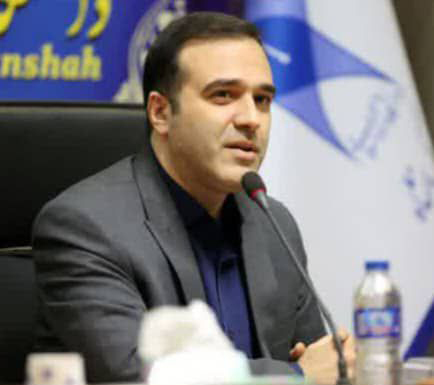
Taheri Entrprenuership Co. Daneshyaran of Humanities (TECODH) a non-governmental think tank, interviewed Mohammad Nakhi, Head of Studies and Research at the International Center for the Qur’an and Propagation of Islamic Culture and Communications.
TECODH, 30 November 2025
Mohammad Nakhi holds a Ph.D. in Islamic Civilization Studies and a Master’s degree in Islamic History. He has served as the Head of the Asia and Oceania Department of the World Forum for Proximity of Islamic Schools of Thought, as well as, Head of Conferences and Training at the same institution, and is currently the Head of Studies and Research at the International Center for the Qur’an and Propagation of Islamic Culture and Communications. He is also a member of the Council for the Dialogue and Convergence Office of Ethnicities, Religions, and Denominations at Islamic Azad University. As a professor and researcher, Nakhi has authored numerous works in the field of inter-sectarian rapprochement (Taqrib). In his interviews and public discussions, Mohammad Nakhi consistently emphasizes the necessity of dialogue between Islamic schools of thought, unity, mutual respect, and the importance of cultural and social forms of proximity. Nakhi is regarded as an influential figure in the field of Taqrib in Iran—a person who has played a significant role both at the executive level—establishing Taqrib offices, organizing conferences, camps, and educational programs—and at the intellectual and research levels, helping expand this cause across the country.
Given his educational and scholarly work, Nakhi is considered a representative of the academic community within the Taqrib movement—a bridge between universities and seminaries. He is among those who strive to extend Taqrib beyond purely jurisprudential frameworks, embedding it within institutional, cultural, and academic structures. With his strong command of Islamic history, he has been invited numerous times to lecture at various universities across Iran. He repeatedly stresses that rationality and ethics are the most fundamental pillars of Taqrib. This interview, too, explores the role and significance of inter-sectarian rapprochement in Iran through that very perspective.
Mr. Mohammad Nakhi, thank you for accepting our invitation to discuss taqrib or Islamic unity among the different Islamic sects. What, in your view, is the philosophy of Taqrib (rapprochement between Islamic schools of thought) among Islamic religious schools?
Today, the term Taqrib is used frequently in Iran. At first glance, it may appear to be a purely religious concept. Yet, if we look beyond strictly theological boundaries and adopt a broader human perspective, Taqrib can be understood as ethical coexistence, grounded in mutual respect and the rejection of two corrosive attitudes: fanaticism and arrogance.
The philosophy of Taqrib is built upon two fundamental pillars: reason and ethics. I beleive that within Islam, what brings together Muslims of different schools—Sunnis (Hanafi, Shafi‘i, Maliki, Hanbali) and Shi‘is (Imamiyyah, Zaydiyyah, Isma‘iliyyah)—is something deeper than their juristic or theological differences.
The Qur’an declares that “We have certainly honored the children of Adam”, that God has endowed human beings with dignity—an unconditional dignity, attached to no particular creed, race, gender, or sect. Human dignity, therefore, is a shared status inherent to all people.
In Sūrat Āl ʿImrān (3:103), a verse is often recited during our Taqribi gatherings in Iran focused on unity: “Hold fast, all together, to the rope of God and do not be divided.” Yet, the continuation of the verse clarifies the foundation and philosophy of this unity. First, it commands believers to gather around the divine “rope”—one clear manifestation of which is the Qur’an. Then it emphasizes, “Do not be divided.”
Here, one must distinguish between difference and division. Difference is natural; it arises from the very order of creation: the alternation of night and day, the change of seasons, the diversity of colors and languages, etc. Difference itself is not blameworthy. What is condemned is division—transforming natural differences into grounds for separation and hostility.
The verse continues by recalling a divine blessing: the blessing of affection (ulfa), through which people became “brothers.” It then warns that division is akin to falling into a “pit of fire”—a descent that not only harms individuals but also burns away the foundations of social cohesion. Thus, in my view, the philosophy of Taqrib rests on two firm foundations: ethics and reason.
What do you consider the greatest obstacle to Taqrīb?
In my view, the main obstacles can be summarized under three headings: ignorance, fanaticism, and ego. The first is ignorance. A person usually fears or opposes what they do not understand. Knowledge of the other—beliefs, ideas, and motivations—creates the groundwork for mutual understanding. Understanding brings closeness, and closeness fosters affection and a sense of shared existence, even when intellectual or theological differences remain.
The second obstacle is fanaticism—an irrational, blind attachment to a cause or belief, to the extent that one may even sacrifice truth for its sake. Religious fanaticism is among its most harmful forms. The Qur’an offers an example of such behavior: some Jews claimed that Christians understood nothing of religion, and Christians made the same claim about Jews. Both groups were trapped in a form of fanaticism rooted in the assumption that they alone possessed the truth. Fanaticism breeds envy and resentment.
The third obstacle is ego. Ego must not shape our words and actions. Ego leads a person toward moral decline and represents one of the most serious barriers to Taqrib. When Shiʿa Muslims consider themselves superior to Sunnis, and Sunnis similarly view themselves as superior to Shiʿa, both fall into a form of ignorance that produces misplaced fanaticism—one that prevents either side from truly listening. As long as genuine dialogue does not emerge and being with one another does not replace standing against one another, distances will widen and divisions will deepen.
What approach can effectively promote unity? Should we rely on history, jurisprudence, theology, or political, economic, and social issues?
Each of these domains, if taken as the sole foundation, faces its own shortcomings and limitations. For example, although Shiʿa and Sunni Muslims emphasize many shared beliefs, returning to early Islamic history reveals their differing views regarding the Prophet’s succession. In jurisprudence as well, despite agreeing on more than ninety percent of legal matters, the small percentage of differences can still become grounds for distancing and division. Political factors also cannot serve as a stable basis; they function only as long as a common enemy exists, and once that enemy disappears, alliances built on political considerations may weaken. In my view, what can offer a lasting foundation for convergence are the principle of human dignity and the logic of ethics and rationality—universal and elevated principles that, beyond all differences, possess the capacity to bring human beings together.
How can juristic differences be managed in a way that leads to convergence?
The first step is to acknowledge that differences exist and that their existence is natural. It is evident that juristic disagreements are not limited to Shiʿa and Sunni traditions; they also appear among the four Sunni schools of law. Even within the Shiʿa Imāmī tradition, scholars often disagree on numerous legal rulings. For instance, in matters such as listening to music or shaving the beard, multiple divergent opinions can be found among Imāmī jurists. Likewise, in the Sunni tradition, although praying with folded hands is considered recommended, scholars still differ on the precise position in which the hands should be placed. At times, a particular Shiʿa legal opinion may resemble the view of one Sunni school more closely than the Sunni schools resemble one another—and the reverse can also be true. In theology as well, no matter how much effort is invested in bringing Shiʿa and Sunni perspectives closer, some doctrinal differences will inevitably remain. These differences, regardless of whether one considers their underlying premises correct or incorrect, are real, and neither side can—or should—be expected to abandon its beliefs.
In the context of Taqrīb, the goal is not for Shiʿas to become Sunnis or for Sunnis to become Shiʿas. The aim is neither merging the schools nor standardizing beliefs. The focus is on mutual closeness, dialogue, and respectful coexistence. Therefore, the approach must be guided by ethics and rationality in both dialogue and interaction, for only these two principles can truly create the conditions for meaningful convergence.
How do you assess Taqrib in the face of modernism and secularism? To what extent modernity or secularism benefiting or hindering the project of Taqrib in Iran?
I do not intend to make value judgments here, nor I am seeking to affirm or reject modernism or secularism. However, within modernity and secularism, I believe, there are elements which—if approached with a constructive and positive perspective—can overlap with the aims of Taqrib. Since Taqrib is grounded in ethics and rationality, it is not inherently in conflict with either modernity or secularism.
There are meaningful points of connection that can be established between Taqrib and modernity or secularism. Even when core religious discussions are framed within these two paradigms, there remain areas of overlap. It seems that in addressing the relationship among Taqrib, modernity, and secularism, one should avoid a binary, all-or-nothing approach. These phenomena are neither entirely contradictory nor fully aligned; rather, they intersect at various levels. Therefore, the relationship should be viewed in a relative and realistic manner.
What role does the young generation have in the future of Taqirb?
The younger generation plays a leading and influential role in many fields worldwide. Since Taqirb is a social and cultural endeavor, young people can serve both as inspiring role models and as capable intellectual and practical contributors to its advancement. Universities and religious seminaries need to engage seriously the youth in this field, as this generation not only brings fresh ideas but also possesses strong operational abilities. Although some members of today’s generation may feel distanced from religious governance—or even from the form of religion presented by certain religious actors—the majority still care deeply about ethics, and ethical concerns rank highly for them. This ethical orientation can serve as a significant point of connection that enables young people to play an active role in the project of Taqirb.
If you are to suggest one immediate measure and one long-term approach to strengthen Taqrib, what would they be?
In my view, the immediate measure is a return to the moral and rational nature of human beings—a return to the authentic teachings and principles of religion, placing the Qur’an at the center of human dignity. When ethics and reason guide our conduct, daily behavior and speech naturally move toward tolerance, fairness, and mutual respect, creating a suitable foundation for rapprochement among different schools of thought.
For lasting impact, however, the long-term solution is sound and comprehensive education. This education should begin with children, yet adults also need it. We must teach the youth not to approach followers of other denominations with suspicion, to respect the beliefs of others, and to incorporate human and moral values into their interactions.
This educational effort is not confined to schools; universities, seminaries, and cultural institutions also require ongoing programs. To achieve this, we need teachers and mentors who, in addition to academic mastery, embody a spirit of rapprochement—educators who teach on moral and rational foundations with scholarly fairness and integrity. With such an approach, we can hope that the Islamic world will gradually move toward a space free from violence and rich in empathy and cooperation—a place where Taqrib among schools of thought becomes not merely a slogan, but a living cultural and practical reality.
Taheri Entrepreneurship Co. Daneshyaran of Humanities (TECODH) a non-governmental think tank, interviewed Mohammad Nakhi, Head of Studies and Research at the International Center for the Qur’an and Propagation of Islamic Culture and Communications. 30 November 2025.