
Taheri Entrprenuership Co. Daneshyaran of Humanities (TECODH) a non-governmental think tank, interviewed Mohebullah Noori, Head of the Fajrestan Regional Convergence Movement.
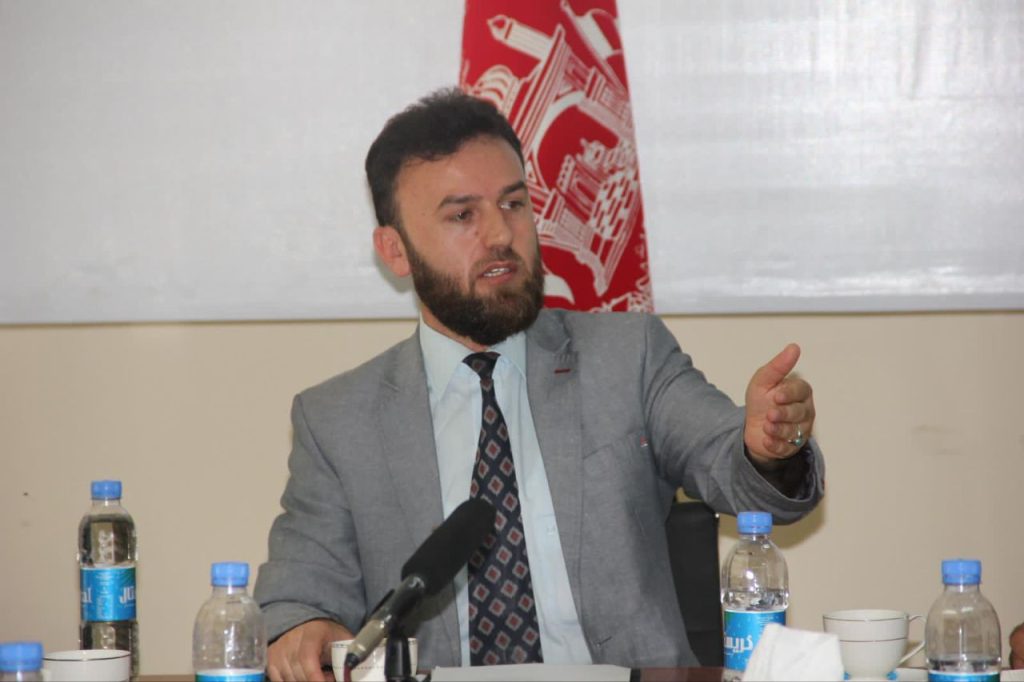
TECODH, 19 November 2025
Mohebullah Noori, a Political Science scholar, previously served as the Head of the Policy Planning Department at Afghanistan’s National Security Council, is regarded as one of the theorists on regionalism in Afghanistan. He has authored works and delivered many lectures on regional cooperation and unity among neighboring nations. M. Noori is a familiar figure among Afghan intellectuals, leaders, and the academic community. His influence extends beyond theory. Noori has led initiatives to advance his ideas. He established the World Organization for the Support of Regional Convergences (2009) in India and founded the Movement for the Convergence of the Heart of Asia Nations in Afghanistan (2011), mobilizing thousands of young people—especially in border regions—to advocate for open borders and the free movement of people, ideas, and goods. After the fall of the Afghan government in 2021, Noori migrated to the United States of America, where he founded the Fajrestan Regional Convergence Movement. He recently addressed a letter to the Middle Eastern leaders calling for the formation of a new regional order — Fajrestan. In this interview, we ask Noori: What is Fajrestan? Given today’s international environment, how can this idea be implemented in the Middle East? And what opportunities and challenges might it face?
Mr. Noori, thank you for speaking with TECODH. To begin, what exactly is Fajrestan?
The idea of Fajrestan took shape after the large-scale migration of Tajik citizens into Afghanistan—including into my hometown in Takhar Province—between 1993 and 1997. In 2000, during a short period of migration with my family to Mashhad (Iran), this concern became even more pronounced in my mind.
My advocacy for this concept began in 2001 during a trip to the border town of Shughnan in Badakhshan, where I witnessed the separation of families on both sides of the border and the difficult economic conditions they faced. From then onward, I continued to study the region while advocating for open borders and freedom of movement. Through this research, I realized that our region extends far beyond the Persian-speaking sphere and encompasses many ethnic groups and nations.
In 2007, I attended the “Persian-Speaking Journalists Conference” in Tajikistan. I saw this event as an opportunity to present my theory. I consolidated my ideas and published them in a monograph titled “The Civilizational Sphere of Fajrestan.” In it, I explained that this sphere embraces all the cultures and civilizations of the region—from Turkic and Persian to Urdu, Pashtun, and Baloch—and that in the long run, it could even extend to culturally connected Gulf countries.
Between 2007 and 2011, during my post-graduate studies in India, I wrote a book titled “Fajrestan: A Movement for the Coexistence of Regional Nations.” The central idea of the book was upgrading ECO into a union similar to the European Union, eventually evolving into a confederation or even a regional federation. In that work, I referred to the creation of ECO as “the last miracle of the twentieth century” and argued that its formation would have been impossible without the collapse of the Soviet Union. In my view, ECO is one of the most strategic organizations in the region’s modern history and must be strengthened and embedded into the public consciousness of regional nations.
In a letter I recently addressed to the Middle Eastern leaders, I revisited the concept of Fajrestan’s civilizational sphere—first introduced in 2007 and completed in 2011. I proposed the formation of an inclusive civilizational union for the region.
I also criticized foreign interventions, internal extremism, and divisive nationalisms—factors that have long plagued the region—and underscored the need to strengthen structures that reinforce cultural and civilizational bonds. My belief is that regional convergence must be built on civilization, shared identity, people-centeredness, and democracy.
The term “Fajr” (dawn) combined with the suffix “–stan,” widely found in the region’s country names, symbolizes the deep historical ties among the region’s nations; originally conceived as a cooperation framework among the “Stan” countries and Iran. This idea has since evolved into a broader vision for building the Civilizational Union of Fajrestan.
On what principles is the vision of Fajrestan founded?
The vision rests on five fundamental principles: 1. Inclusivity and pluralism; participation of all nations, languages, cultures, and religions—without domination by any group. 2. Peace, democracy, and dialogue; legitimacy must arise from the will of the people, not from military power or ideological imposition. 3. The civilizational right to self-determination; regional nations should shape their collective future based on shared values and traditions. 4. Convergence, connectivity, and open interaction; open borders, free movement of people, ideas, and wealth, and economic and cultural cooperation. 5. Regional balance and active neutrality; constructive engagement with global powers without dependency.
Grounded in these principles, the Civilizational Union of Fajrestan could redefine the region’s order based on peace, prosperity, and human dignity.
Within this framework, the proposed regional order would rest on two complementary pillars: 1. ECO member states as the linkage between Central, South, and West Asia. 2. GCC member states as the financial, infrastructural, and strategic engine of the Arab world and the Gulf.
Together, these two pillars could constitute the foundation of the Fajrestan Civilizational Union.
Given the Middle East’s complex environment—where regional actors and global powers compete—do you believe a framework of this scope is feasible without strong state backing or Western support?
I believe global developments have created a favorable environment for a new regional order in the Middle East. Today, the primary strategic concern for the West is China—not the Middle East. As a result, Western countries, especially the United States, now seek de-escalation, peace building, and diplomacy focused on technological and economic cooperation in the region. Initiatives such as the “Abraham Accords” reflect this shift.
In this new approach, counterterrorism is no longer the West’s primary agenda in the Middle East, and even support for democratic reforms has largely receded. Clear examples include the normalization of relations with extremist groups such as the Taliban in Afghanistan or Hayat Tahrir al-Sham in Syria, as well as the reluctance to intervene militarily in regional crises. Similarly, President Trump played a mediating role in the India–Pakistan conflict, and when war broke out between Iran and Israel, I believed—contrary to many analysts—that he would not support its escalation; indeed, his limited intervention eventually contributed to the ceasefire.
Today, technological competition, economic cooperation, and diplomacy of de-escalation are at the center of global priorities. The Abraham Accords, the renewed pace of multilateral diplomacy, mediation efforts, and the recognition of the State of Palestine by several Western countries in 2025 signal that the global environment is shifting toward stability, cooperation, and peace in the Middle East.
Now, within this context, the Fajrestan movement proposes a civilizational union aligned with these emerging global realities—one that could steer the region away from rivalry and conflict and toward cooperation and shared progress. This vision draws on a common civilizational heritage and seeks to replace imposed systems and exclusionary ideologies with regional convergence rooted in identity and culture.
Do you see existing ethnic, sectarian, and political tensions in the Middle East as barriers to your vision?
Today, Middle East is the only major region in Asia lacking a cohesive and integrated regional bloc. The formation of the Civilizational Union of Fajrestan could fill this historic gap and position the region as the fourth major Asian bloc—founded on cooperation and human dignity.
Fajrestan is not a revival of past empires nor a project of forced unity. It offers an inclusive, equitable, civilizational framework that accommodates all groups—Arab, Persian, Turk, Kurd, Pashtun, Baloch, Sunni, and Shia—ensuring that each feels represented within a new regional order.
Encouraging signs are already emerging. The peace process between Turkey and the PKK, and the reduction of sectarian tensions following the normalization of relations between Iran and Saudi Arabia in 2023, demonstrate that ethnic and sectarian divides can be managed and even resolved when embedded in inclusive political structures and regional convergence.
So, you believe locally rooted, convergent, and civilizational frameworks can succeed in the region?
Yes, history shows that structures lacking cultural affinity or shared historical ties often fail to endure. The Soviet Union is an example: its collapse paved the way for the emergence of ECO—a structure rooted instead in cultural and historical affinities.
Moreover, Turkey’s strategic shift toward the Organization of Turkic States (OTS) and the geopolitical vacuum following the US and NATO withdrawal from Afghanistan underscore the region’s growing need for frameworks grounded in indigenous convergence, civilizational ties, and cultural realities.
You write letters to the Middle Eastern leaders and speak in the media about Fajrestan. What is your core message to these regional leaders?
My central goal is to invite regional leaders to work toward establishing the Civilizational Union of Fajrestan. The Middle East has been weakened for centuries by internal divisions and foreign interventions—producing deep ethnic, sectarian, and political fractures. Yet despite political borders, our nations remain bound by deep historical, cultural, and civilizational ties.
I believe we now stand at a moment when the foundations of a new regional order can be laid—an order emerging from within the region itself. Realizing this vision requires the will, foresight, and collective commitment of regional leaders, thinkers, and societies. Without such will, cycles of violence, division, and conflict will continue.
What you propose to the leaders of the Middle East?
Today, we face a rare historic moment. History seldom offers its great opportunities twice. Recent regional and global developments show that we have entered a decisive period. The dawn of Fajrestan has arrived, and now is the time for action—to transform this opportunity into a stable, people-centered regional order.
The aim is not to follow East or West, but to stand on our own foundations, draw upon regional capabilities, and shape a future rooted in our own cultural and civilizational identity.
Accordingly, the Fajrestan movement proposes several key steps. 1. A summit of Middle Eastern states led by ECO and the GCC, with full participation of Iraq, Syria, Lebanon, and Palestine. 2. A roadmap for a civilizational union featuring mechanisms for joint governance, economic corridors, technological cooperation, cultural dialogue, and collective security. 3. Institutionalizing inclusivity, balance, and justice; recognizing an independent Palestinian state, supporting the cultural rights of minorities such as Kurds, Pashtuns, and Baloch, and creating sustainable frameworks for Sunni–Shia coexistence.
Together, these measures could lay the foundation for transitioning the region from cycles of tension to cooperation, development, and coexistence.
What role can Iran play?
If Iran adopts a forward-looking strategy aligned with the needs of the 21st century, it can play a constructive and influential role in the region. Such a strategy must facilitate conditions for economic and cultural development, and a key element of this approach is inclusive regional convergence. By inclusive convergence, I mean not limiting cooperation to Persian-speaking regions, but rather embracing a broader framework that recognizes the region’s cultural and identity diversity. Based on this approach, Iran can pursue new patterns of cooperation with a wide network of neighboring and culturally connected countries—from Afghanistan, Pakistan, and Turkey to the Caucasus, Central Asia, and the Gulf states.
Such cooperation can enable meaningful developments in the fields of economy, energy, culture and regional security.
Taheri Entrepreneurship Co. Daneshyaran of Humanities (TECODH) a non-governmental think tank, interviewed Mohebullah Noori, Head of the Fajrestan Regional Convergence Movement. 19 November 2025.